Girls as Young as Nine Feel Pressure to Live 'Perfect Lives' as UK Moves to Ban Under-16s From Social Media
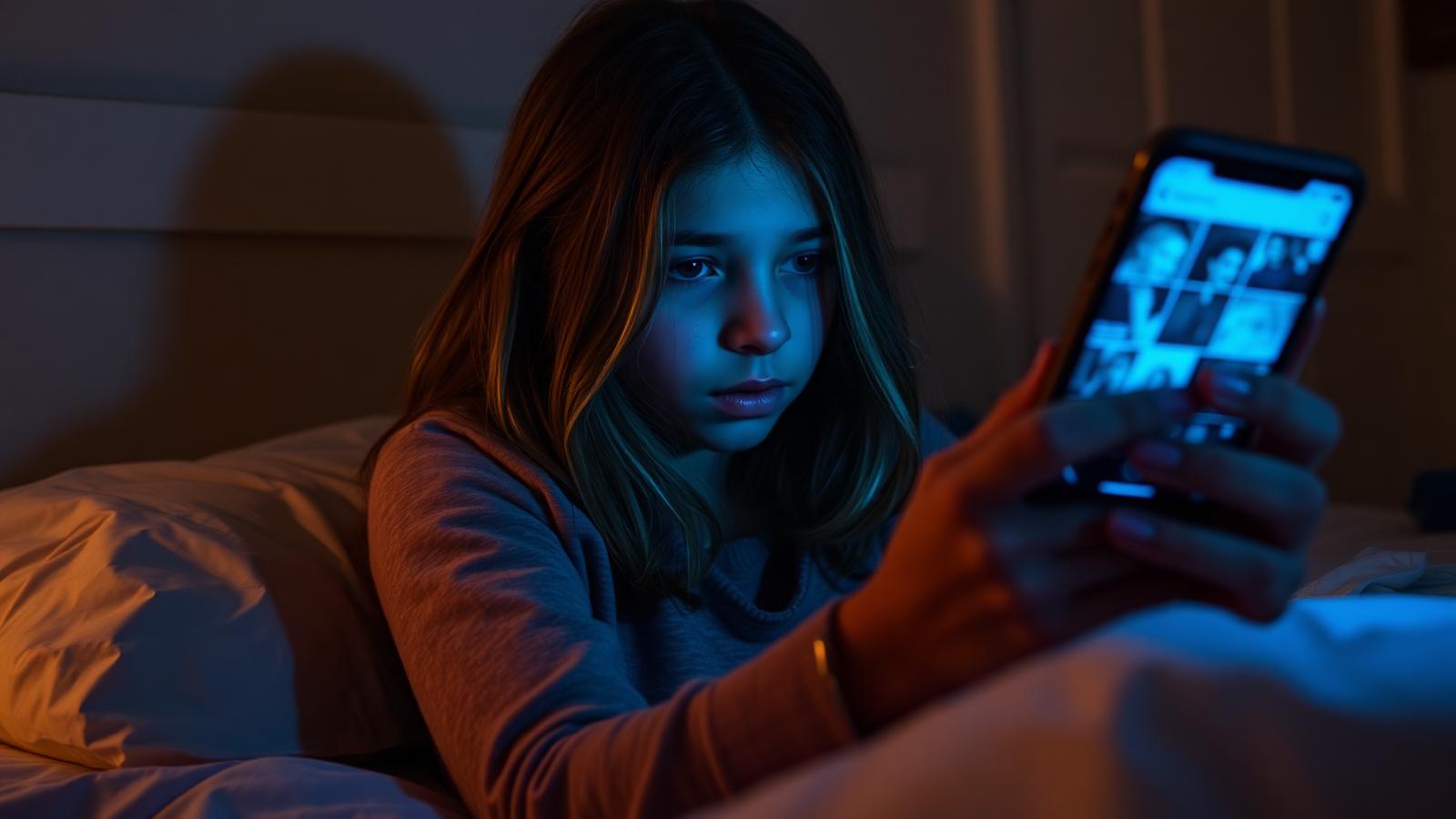
New University of Surrey research finds girls as young as nine feel pressure from influencers to live 'perfect lives' — landing the same week Keir Starmer's government confirmed a ban on under-16s using TikTok, Instagram, Snapchat, Facebook, X and YouTube from spring 2027.
By Board of Creators ·
Key takeaways
- Girls as young as nine told University of Surrey researchers they feel pressure to live 'perfect lives' because of influencers, citing lashes, slim bodies, lip fillers and Botox as expected norms.
- Sir Keir Starmer's government confirmed a ban this week that will stop under-16s from creating or maintaining accounts on TikTok, Snapchat, YouTube, Instagram, Facebook and X — enforced by Ofcom from spring 2027.
- WhatsApp and Signal are exempt; platforms in scope must implement 'robust age-verification' or face Ofcom enforcement.
- Researchers Dr Robyn Muir and Dr Emily Setty argue comparison culture predates social media, but platforms have 'repackaged it' into something far more intensive — and the right response is education, not just prohibition.
- For creators and brands, the policy shift signals a structural reset: the UK joins Australia, parts of the US and Norway in restricting under-16 access, forcing audience strategy, age-gating and creative tone to be rethought for the under-18 audience.
A landmark UK study and a sweeping government announcement landed in the same week — and together they redraw what it means to be a creator with a young audience in 2026.
''Probably Really Long Lashes and a Really Slim Body''
That''s how a girl aged nine to eleven described what an influencer looks like to researchers at the University of Surrey. Another, slightly older, defined an influencer by their "perfect life": the boyfriend, the job, the food.
The study — led by Dr Robyn Muir and Dr Emily Setty, published in Children & Society and reported by The Independent on 17 June — interviewed girls in years seven to ten across schools in southeast England about how they engage with influencer culture.
The findings are uncomfortable, but precise:
- Years 5–6 (ages 9–11): already worried about self-esteem, already aware of "Botox and hair extensions," already coaching themselves through self-affirmations.
- Years 7–8 (ages 11–13): ambivalent — frustrated by comparison culture and a lack of diversity, but also by the lack of any clear strategy for how to "love yourself."
- Years 9–10 (ages 13–15): more critical — calling out unattainable lifestyles and a narrow beauty default.
"Younger girls were worried about the impact of their self-esteem, actively trying to navigate it with their family and peers," Dr Muir told The Independent. "But they also had a need to feel validated, and were aware of things like Botox and hair extensions."
The Same Week: A Sitting Prime Minister Bans Under-16s From Social Media
While the Surrey research circulated, Sir Keir Starmer confirmed that the UK will prevent under-16s from creating or maintaining accounts on major social media platforms. The legislation is designed to limit children''s exposure to "addictive algorithms, harmful content and excessive screen time," with the prime minister stating that social media is contributing to children''s unhappiness.
What''s In Scope
- TikTok
- Snapchat
- YouTube
- X
What''s Exempt
- Signal
Platforms in scope will be required to implement "robust age-verification systems" and the ban is expected to be enforced by Ofcom from spring 2027. The move puts the UK alongside Australia, parts of the US and Norway in restricting under-16 access to mainstream feeds.

The Research Bit That Most Coverage Missed
Dr Muir was careful to make a point that gets flattened in most headlines: comparison culture and unattainable beauty standards were not invented by social media.
"They were in magazines, newspaper headlines, films, books, adverts, songs. They have been here for a very long time. Social media has just repackaged it and made it very intensive," she said.
Co-author Dr Emily Setty went further on what actually works:
"Girls actually resist the idea that adults are inherently out of touch. They drew parallels between their own TikTok habits and their parents'' use of Facebook. But adults have to come to those conversations with curiosity and humility rather than control. That shift is entirely possible; it just requires us to take what girls are telling us seriously."
Translation: the most effective intervention isn''t a ban — it''s an adult who can sit down and have a serious, non-condescending conversation about what young audiences are actually seeing.
What This Means for Creators, Brands and Platforms
It''s tempting to read this as a "policy story" and skip it. Don''t. If you create, manage, or invest in a brand that touches a UK audience, three things change here:
- Your under-16 audience is about to disappear from the official metrics. If platforms enforce age verification properly, anyone who built a niche around 11–15-year-olds (gaming, fandom, beauty, dance, school humour) needs a re-segmentation plan for spring 2027.
- The "aspirational lifestyle" default is now a regulatory liability. Researchers were specific: nine-year-olds describing influencers by lip filler and slim bodies isn''t a culture-war talking point — it''s peer-reviewed data the next round of platform rules will lean on. Creators who voluntarily diversify body types, disclose filters and break the "perfect life" frame will age well into the new rules. Those who don''t will increasingly look like the problem the regulator is solving for.
- Parents are now a primary audience, not a side audience. Setty''s point — that adults have to engage with "curiosity and humility rather than control" — is a creative brief. The creators who win the next 18 months in the UK will be the ones who explicitly help parents have those conversations, not the ones who quietly hope they don''t.
The Honest Read From Board of Creators
Bans are blunt. The minister behind this one has already conceded — in The Independent''s own reporting — that the ban is "no silver bullet." It isn''t. But it''s also not nothing.
What the Surrey research actually says is that young girls are already doing the work themselves: practising self-affirmations, asking for help, asking for clearer strategy from the adults around them. They are not, as the panic frame suggests, helpless. They are under-resourced.
That is a brief any serious creator should be able to fill — better than any age gate.
The full research toolkit and resources to help girls navigate influencer culture are published here. Reporting by Olivia Barber and the news desk at The Independent, 17 June 2026.
More creator-business reporting from Board of Creators · Browse the creator directory