As Political Influencers Surge, Calls Grow to Regulate the Money Behind the Posts
Hundreds of creators are now credentialed at conventions and paid by campaigns — but most viewers have no idea which posts are sponsored. Inside the California fight that could set the rules.
By Board of Creators ·
Key takeaways
- 1 in 5 Americans get news from influencers (Pew, 2024) — nearly 2 in 5 for adults 18–29.
- California's 2023 disclosure law caps fines at just $5,000 per violation, with no criminal or administrative penalty.
- There is no federal disclosure requirement for paid political content; the Campaign Legal Center has petitioned the FEC to change that.
- In 2024, the DOJ indicted RT employees for funneling ~$10M through a U.S. firm that paid right-wing creators to unwittingly publish pro-Russia content.
- Creator takeaway: build a disclosure-first practice (clear #ad tags, sponsor names, public rate cards) before regulators force it.
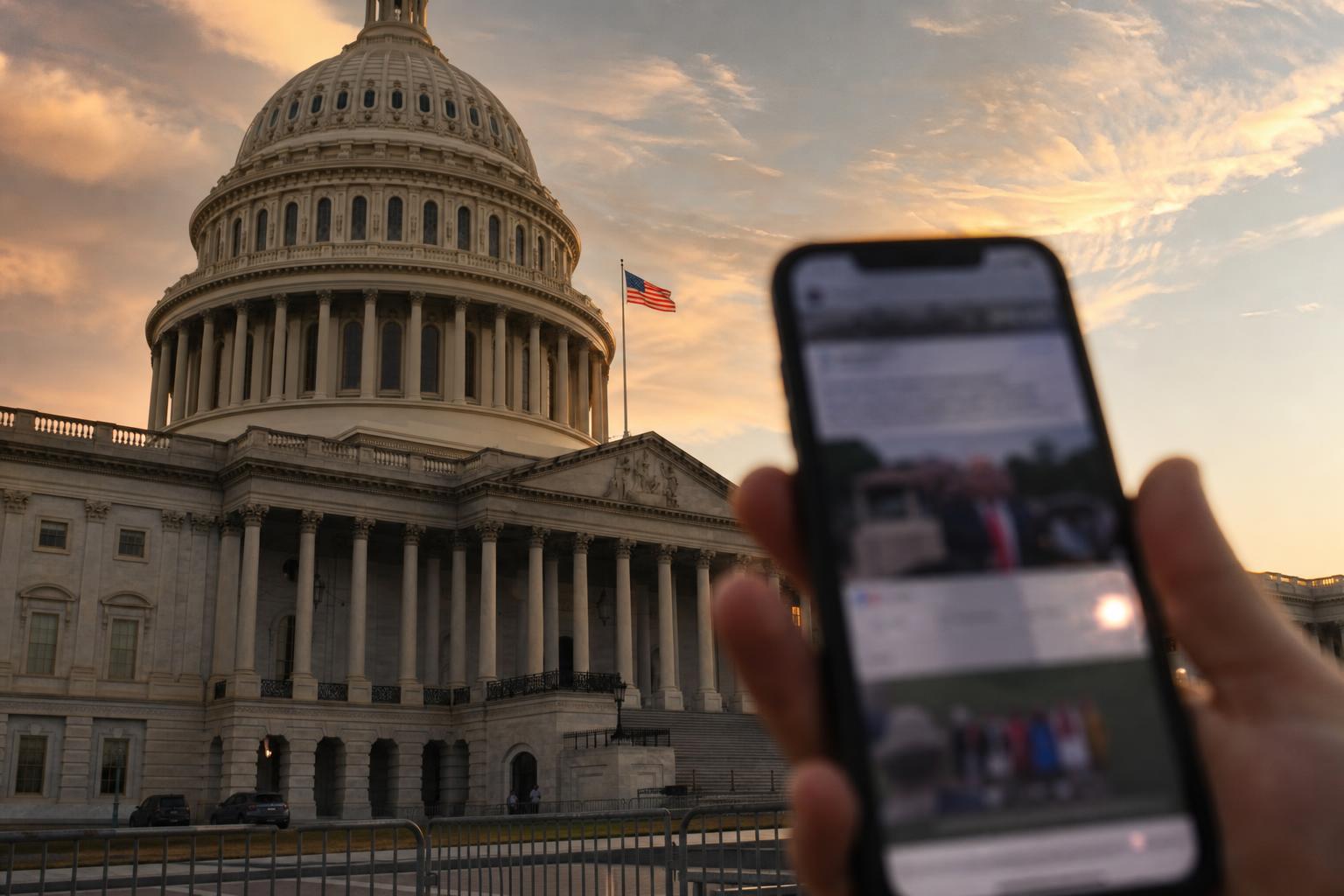
WASHINGTON — In the 2024 election, hundreds of social media influencers were credentialed for the first time to attend the Democratic and Republican conventions. Since then they have been invited to holiday parties at the Pennsylvania governor's mansion, to political rallies in Texas, and to events at the White House under both the Biden and Trump administrations.
Now, as creators move from the cheap seats to the green room, a fight in California's gubernatorial race is forcing a question Washington has mostly avoided: who has to tell you when a political post is paid for?
The "friend in your feed" problem
Campaigns aren't chasing influencers for their production value. They're chasing their intimacy.
"You have that sense of authenticity, like a friend is talking to you." — Emma Briant, propaganda researcher at Notre Dame's Lucy Family Institute for Data & Society, speaking to the Los Angeles Times.
That's exactly what campaigns are trying to harness when they cut influencers a check. Roughly 1 in 5 Americans said they regularly got news from social media influencers in 2024, according to the Pew Research Center — and that number nearly doubles for adults aged 18 to 29.
The Steyer campaign and the California test case
The current flashpoint is California's gubernatorial race, where Democratic candidate Tom Steyer — who has already self-funded $192.4 million into his bid — leaned on paid creators more aggressively than any other candidate in the field, according to the most recent campaign finance filings reviewed by the L.A. Times.
The catch: many of those creators — some with millions of followers, others with a few thousand — didn't disclose that their pro-Steyer posts were paid for.
Influencer Carlos Eduardo Espina (14M+ TikTok followers), who serves as a publicly announced advisor to the campaign, later wrote on Substack that he has been paid $400,000 for his work with the campaign:
"You will never see anything on my channels that I don't believe in, or that I think goes against the best interest of my community. No one buys my opinion. But I also think it's fair to be compensated for my work."
Steyer himself defended the practice on Substack, arguing creators deserve to be paid and that the campaign had been transparent in its filings. The campaign called the complaint against it "baseless."
Influencers reporting influencers
The complaint came, fittingly, from two other creators.
Beatrice Gomberg — known on TikTok as @antiplasticlady with more than 180,000 followers — started posting about plastic-free children's products after losing her HR job at Macy's during the pandemic. Her feed slowly turned political. She interviewed Katie Porter, met Xavier Becerra, and at one of Becerra's April events met Kaitlyn Hennessy, another politics-focused creator.
Scrolling the governor's race together, they kept hitting the same wave of pro-Steyer videos posted by accounts with eerily similar messaging.
"I wondered at first if they were actually created by artificial intelligence." — Kaitlyn Hennessy
What they found instead was a network of women — some operating multiple profiles to push different products — alongside named, big-account creators like one with the handle Zay Dante (1.8M TikTok followers) who appeared in Steyer's disclosures but not on the posts themselves.
The pair filed a formal complaint with California's Fair Political Practices Commission, which has not yet ruled.
What California's 2023 law actually requires — and doesn't
California is one of the only U.S. jurisdictions with rules on the books. Under its 2023 statute:
- Influencers must disclose when a political post is sponsored, and name who paid for it.
- Political groups must notify paid creators of that disclosure requirement.
But the teeth are short. Violations carry no civil, criminal, or administrative penalty. The FPPC can take violators to court to force compliance, and fines max out at $5,000 per instance.
At the federal level, there is no disclosure requirement for paid political content at all. The nonprofit Campaign Legal Center has filed a rulemaking petition asking the FEC to require disclaimers on paid influencer content.
"The problem is that it doesn't look like an ad. It ends up really getting people at a place where they're not skeptical and not able to tell the difference between what's voluntary and where the influencer is acting as a paid spokesperson." — Saurav Ghosh, former FEC enforcement attorney, now director of campaign finance reform at the Campaign Legal Center.
A creator-side debate over taking the check
Not every political creator is on board with sponsorships.
Link Lauren, a political influencer and podcaster who served as a communications advisor to Robert F. Kennedy Jr.'s 2024 presidential campaign, told the L.A. Times he doesn't begrudge other creators for taking the money — but he won't.
"A passive viewer might think you really believe this. I have a strong connection with my audience. I really consider them my family."
Lauren said he favors mandatory disclosure. He also pointed out the upside campaigns are buying:
"If they don't have big personalities, maybe partnering with some influencers who seem cool and fun can make you seem cool and fun also through association."
The foreign-money problem hiding underneath
The disclosure debate isn't just about transparency for U.S. voters. It's also about defense.
In 2024, federal prosecutors indicted two RT employees alleging that Russian state media had funneled nearly $10 million through a Tennessee company that paid popular right-wing American influencers to unwittingly produce pro-Russia content.
Briant, the Notre Dame researcher, argues that without real penalties, that pipeline stays open:
"Ultimately, it's a wild west at the moment if there are no repercussions for not doing it."
Why this matters for creators — not just campaigns
For working creators, the California fight is a preview of what's coming. The political ad budget is moving from television to feeds, the audience trusts creators precisely because they don't feel like ads, and regulators are starting to notice. The creators who build a disclosure-first practice now — clear #ad / #paidpartnership tags, sponsor names in the caption, a public rate card — protect both their audience trust and their legal exposure when the rules tighten.
Because they will tighten. The only question is whether creators help write them, or get written about.
Sources & credits
- Original reporting: "As influencers rise in politics, some call for tighter regulations on payments" — Ben Wieder, Los Angeles Times, May 24, 2026.
- Related: The Steyer campaign pays influencers. Their posts don't always make that clear — L.A. Times.
- Data: Pew Research Center — News Influencers Fact Sheet.
- Petition: Campaign Legal Center FEC rulemaking petition (PDF).
- Indictment: U.S. Department of Justice — RT employee indictment.