AI Just Killed the Influencer Category — And Built Something Better in Its Place
One of the internet's original influencers says the attention economy is over. In a world drowning in AI slop, the only currency that still matters is hard-won expertise — and the creators willing to share it.
By Board of Creators ·
Key takeaways
- David S. Bennahum, one of the internet's first influencers, argues AI and "AI slop" have destroyed influencer credibility.
- The creator economy is shifting from attention to expertise — low-stakes content rewards charisma, high-stakes demands credentials.
- Dr. Becky Kennedy grossed $34M with an AI-augmented expertise platform (Good Inside) and over 100,000 subscribers.
- A Gartner study found half of consumers now prefer companies that avoid generative AI in marketing.
- The new creator moat is proprietary, un-scrapable knowledge — the "intellectual terroir" that big AI models can't replicate.
About 28 years ago, a young journalist at Wired named David S. Bennahum was partly the subject of his own story. The headline? "The Hot New Medium Is … Email." His creation, a newsletter called Meme, reached 4,400 subscribers at a time when the entire internet had only 16 million users. In today's language, Bennahum was one of the first influencers.
Now, as co-founder & CEO of Onix — a personal intelligence platform — Bennahum is declaring the era he helped birth officially over. And he says what comes next is actually better.
From artisanal gardens to industrial "infobesity"
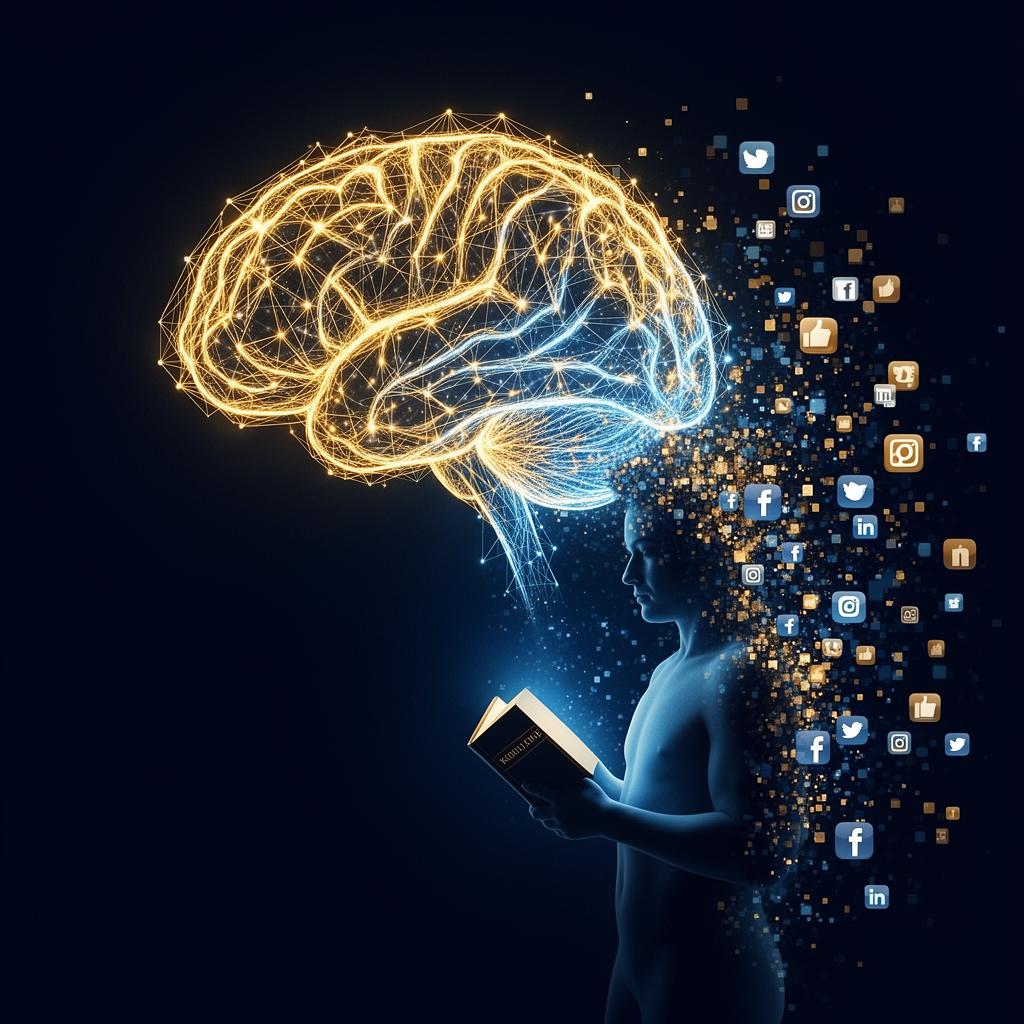
"What began as a land of artisanal knowledge-makers cultivating gardens of wisdom became an industrial farming operation powered by social media platforms," Bennahum writes. On the internet of 2026, people speak of "infobesity" — gorged on processed information from unknown sources, an intellectual abattoir where bits of everything are thrown together with one purpose: to hook us on the feed.
In this slurry of addictive information, people craved the authentic. Influencer culture emerged as a tonic — native guides doing the research for us, helping us make sense of everything from handbags to smoothies, and increasingly the high-stakes stuff: longevity, retirement, parenting.
"Yet as with so much that starts as sincere human-to-human connection online, the higher the stakes, the more conflicted the influencer's role became. Is it entertainment or discernment?"
The pandemic turned influencers into survival tech — with a cost
In spring 2020, influencer content became something darker than entertainment. A terrifying pandemic with no vaccine and no easy explanations sent millions to their screens for answers. Into this panicked information vacuum stepped charismatic figures — "rizz" — who did their own research on COVID and taught us, maybe, how to survive.
"Distrust of expertise became the feature, not the bug."
Into this landscape, ChatGPT burst onto the scene in November 2022, famously becoming the fastest product to reach 100 million people. Now the power to "do my own damn research" reached new heights — more information processed by machines whose provenance was even more mysterious than that of an influencer. A synthetic persona could now compete with the human influencer, feeding more processed intelligence into already-processed intelligence. It came to be known, aptly, as "AI slop."
Why we stopped trusting the voice in the feed
The human in the loop didn't diminish in principle. AI just poured gasoline on an already-burning fire. When the provenance of everything online became suspect, the suspicion spread to everyone — influencers included.
"How do I know you know what you're talking about?"
That question, Bennahum argues, is now directed at every voice online. When it came to health, wealth, and love, charisma was increasingly insufficient to carry the day.
- What is your credential to tell me how to parent?
- What gives you the authority to advise me on my GLP-1 shots?
- What do you really know about the use of psychedelics to treat trauma?
The scarce resource is no longer attention — it's expertise
"The wheel is turning back toward expertise — credentialed professionals with original, hard-won knowledge, not merely fast and fabulous opinion. But with a twist: AI can now powerfully augment that expertise."
Bennahum imagines world-class experts pairing their lifetime of knowledge with a custom AI trained exclusively on their know-how — the juicy stuff never put online for the big models to scrape. He calls this "Whole Knowledge" — like a whole food, spiky bits and all, with real provenance. The intellectual terroir of a human mind, made available to those who need it most.
Already, smaller AI models trained on a narrower body of knowledge — a clinician's lifetime of writing and speaking, for instance — are outperforming frontier models on domain-specific tasks. A recent Gartner study found that half of consumers now actively prefer companies that avoid generative AI in their marketing — suggesting the market is hungry for un-synthetic voices.
Dr. Becky Kennedy and the $34 million proof point
The creator economy isn't dead — it's just graduating. Take Dr. Becky Kennedy, the clinical psychologist who became the parenting whisperer to an entire millennial generation. Kennedy recently announced she had sold over 100,000 subscriptions to her Good Inside platform — which includes 24/7 access to an AI model trained exclusively on her knowledge — grossing $34 million last year. She raised a reported $10 million to make it possible.
"The point is not to automate human connection. It is to rebuild trust in a world where trust has been broken."
When synthetic slop makes the illusion of expertise free, the value of genuine, verifiable wisdom skyrockets. We are moving out of an era where technology rewarded those who captured the most attention, and into an era where technology scales those who hold the deepest knowledge.
What this means for creators in 2026
For the Board of Creators community, Bennahum's thesis lands with particular force. The playbook is shifting:
- Low-stakes content (fashion, travel, entertainment) will still reward charisma and storytelling — but the barrier to entry just got infinitely lower, thanks to AI tools.
- High-stakes content (health, finance, law, parenting) now demands credentials, case studies, and verifiable authority. Rizz alone won't carry the day.
- The moat is proprietary knowledge. What have you done? What have you built? What have you treated? What can't be scraped from the open web?
- Custom AI as product. The most forward-thinking creators are already training narrow models on their lifetime of work — turning intellectual property into scalable, subscription-grade products.
"In my 1998 Wired piece, I wrote that the internet was a place where 'power comes not from wealth, but from thought,'" Bennahum concludes. "In 2026, that idea's time may have finally arrived."
Sources & credits
Primary source: Fortune — "I was one of the internet's first influencers. AI just killed the whole category — and created something better" by David S. Bennahum, May 24, 2026.
Additional references: Gartner consumer preference study; Dr. Becky Kennedy / Good Inside subscriber and revenue figures via public reporting.
The opinions expressed in this commentary are solely the views of the original author and do not necessarily reflect the beliefs of Board of Creators.